
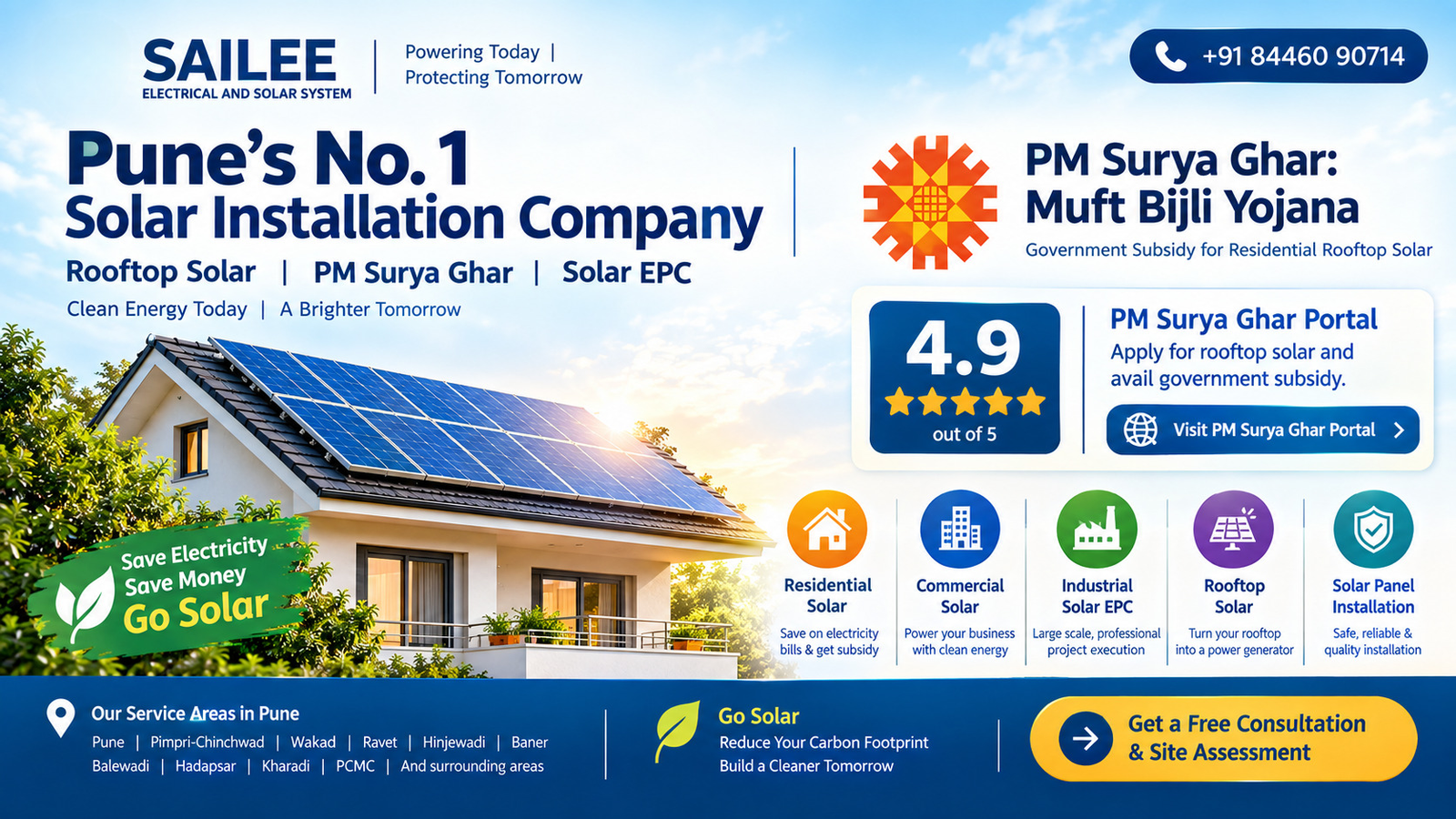
Pune’s No. 1 Solar Installation Company in Pune
When you are investing in a solar energy system, choosing the right Solar Installation Company in Pune is just as important as selecting the right solar panels and inverter.A solar system is a long-term investment. Proper site assessment, system sizing, quality equipment, professional installation, electrical safety, documentation and after-sales support can all influence the overall experience.
SAILEE ELECTRICAL AND SOLAR SYSTEM provides solar installation and EPC solutions for residential, commercial and industrial customers in Pune and surrounding areas.For homeowners in particular, the PM Surya Ghar: Muft Bijli Yojana has created significant interest in residential rooftop solar. The scheme is designed to support eligible households in adopting rooftop solar, making it important for customers to understand the application, installation, subsidy and net-metering process before starting their project.
Why Choose a Solar Installation Company in Pune?
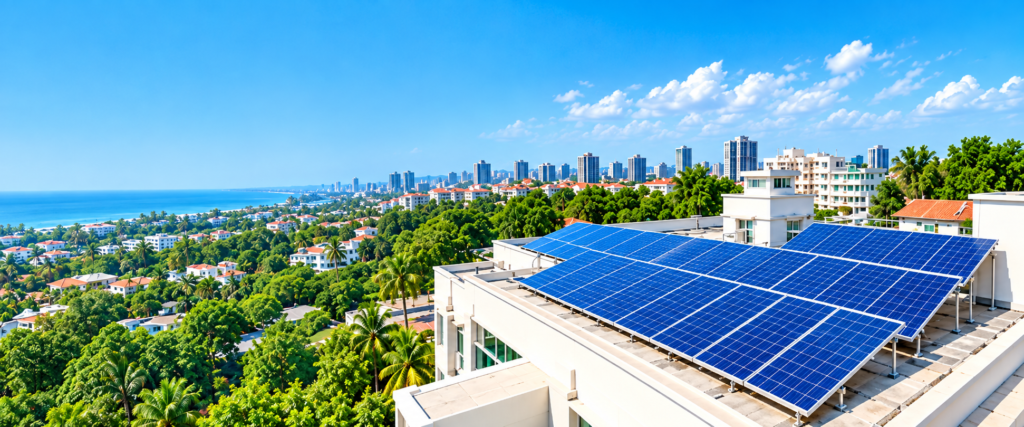
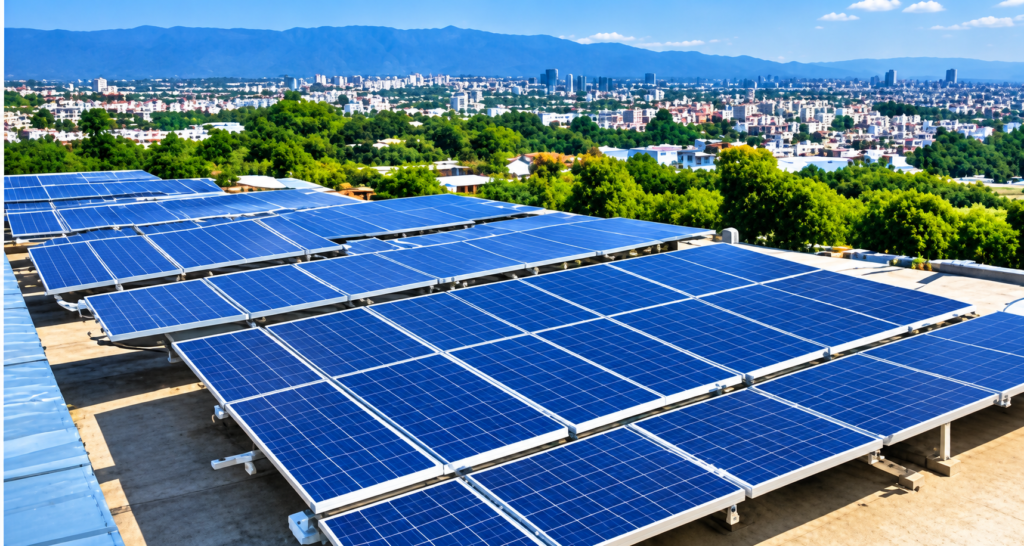
Installing solar panels is not simply a matter of putting modules on a roof.A professional solar project involves several stages:
- Understanding electricity consumption
- Reviewing previous electricity bills
- Conducting a rooftop/site survey
- Checking available installation area
- Evaluating shadow conditions
- Selecting suitable solar modules
- Selecting the appropriate inverter
- Designing the mounting structure
- Planning electrical connections
- Installing protection and earthing systems
- Completing testing and commissioning
- Supporting applicable documentation and utility processes
- Providing post-installation assistance
PM Surya Ghar: Muft Bijli Yojana for Residential Rooftop Solar
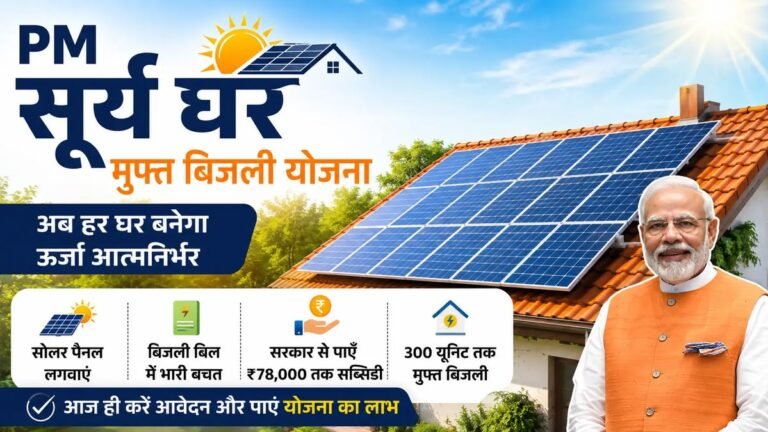
- One of the most important developments in India’s residential solar sector is the PM Surya Ghar: Muft Bijli Yojana.The scheme is intended to encourage households to install rooftop solar systems and increase the adoption of renewable energy.
- For eligible residential consumers, the scheme provides Central Financial Assistance (CFA) for rooftop solar installation, subject to the applicable government guidelines and eligibility conditions.
- The subsidy amount depends on the installed rooftop solar capacity and the scheme’s prevailing rules.
- PM Surya Ghar subsidyUnder the current scheme structure, residential consumers can receive Central Financial Assistance for eligible rooftop solar systems.
This means the maximum Central Financial Assistance for an eligible residential consumer is generally ₹78,000, subject to the applicable scheme rules.
Customers should always verify the latest subsidy rules and eligibility requirements on the official PM Surya Ghar portal before making a purchase.
Who Can Benefit from PM Surya Ghar?
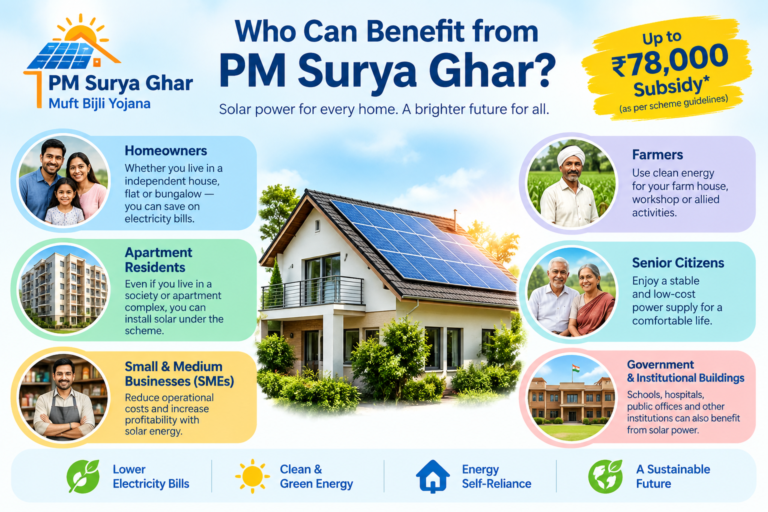
The scheme is primarily aimed at eligible residential electricity consumers who want to install rooftop solar.
Before applying, homeowners should consider:
- Whether the property is suitable for rooftop solar
- Electricity connection details
- Available rooftop area
- Electricity consumption
- Shadow-free solar exposure
- Distribution company requirements
- Applicable installation standards
- Current scheme eligibility conditions
The subsidy is not simply a discount offered by every solar company. It is part of a government-supported process with specific eligibility, documentation, installation and verification requirements.
PM Surya Ghar Application Process
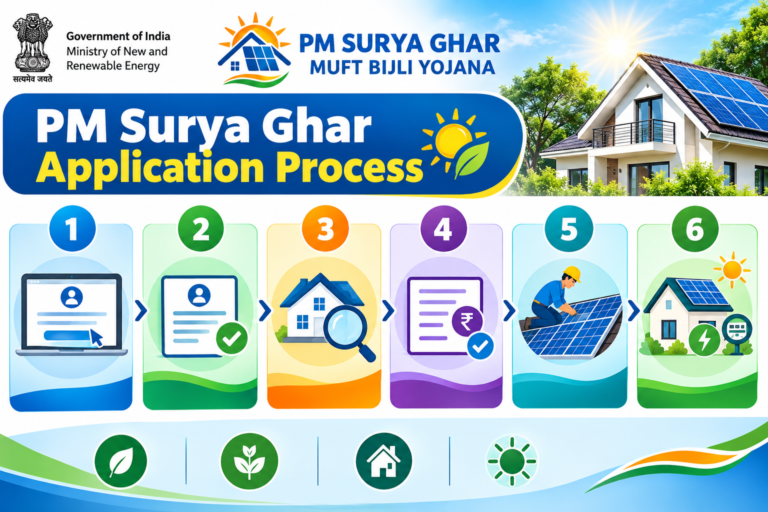
Customers often ask, “How can I apply for PM Surya Ghar?”
The general process involves registering through the official government portal and following the steps applicable to the consumer’s electricity distribution company.
A typical process includes:
Step 1: Register on the PM Surya Ghar portal
The homeowner begins by registering on the official PM Surya Ghar platform using the required consumer and electricity connection details.
Step 2: Apply for rooftop solar
The applicant submits the required information for the proposed rooftop solar installation.
Step 3: Select an eligible vendor
The customer selects a vendor from the available/eligible vendor options according to the applicable scheme process.
Step 4: Site assessment and system installation
The selected solar company assesses the property and installs the approved rooftop solar system according to the applicable requirements.
Step 5: Net-metering process
After installation, the required electricity distribution and net-metering process is completed according to the applicable DISCOM procedures.
Step 6: Inspection and commissioning
The installation may undergo the required inspection, verification and commissioning process.
Step 7: Subsidy/CFA processing
Once the required conditions and verification steps are completed,
The applicable financial assistance is processed according to the government scheme.
Important: Government procedures, portal requirements and subsidy rules can change. Customers should check the latest official information before applying.
How SAILEE ELECTRICAL AND SOLAR Can Help with PM Surya Ghar

For a homeowner, government schemes can sometimes feel complicated.
There are forms, technical requirements, vendor selection, installation, net metering and documentation to understand.
As a Solar Installation Company in Pune, SAILEE can help customers understand the practical steps involved in their rooftop solar project.
Our support can include:
- Initial consultation
- Electricity bill assessment
- Rooftop/site evaluation
- Solar system sizing
- Equipment recommendations
- Rooftop solar installation
- Electrical integration
- Documentation guidance
- Assistance with applicable PM Surya Ghar processes
- Net-metering process coordination where applicable
- Testing and commissioning
- Post-installation support
The exact scope of assistance depends on the project and the applicable government and DISCOM requirements.
The exact scope of assistance depends on the project and the applicable government and DISCOM requirements.
Residential Solar System in Pune

A Residential Solar System in Pune can be designed according to a household’s electricity consumption and rooftop conditions.
For example, a home with air conditioners, refrigerators, water pumps, washing machines and other appliances may have significantly different electricity requirements from a smaller household.
Instead of selecting a system purely based on roof size, the better approach is to examine:
- Monthly electricity
- consumption
- Annual electricity usage
- Available rooftop area
- Shadow conditions
- Roof orientation
- Electrical connection
- Future electricity
- requirements
- Applicable PM Surya Ghar eligibility and subsidy
This helps homeowners understand what type and size of rooftop solar system may be appropriate.
Rooftop Solar Installation in Pune
Pune’s residential and commercial buildings offer considerable rooftop space that can potentially be used for solar generation.
However, every rooftop is different.
Before Solar Panel Installation in Pune, the installation team should evaluate the site for:
- Available roof area
- Sunlight exposure
- Shadows from trees and buildings
- Water tanks and other rooftop equipment
- Structural considerations
- Module arrangement
- Cable routing
- Inverter location
- Earthing
- Electrical safety
Proper planning can help create a safer and more practical installation.
Solar Panel Installation in Pune – What Equipment Is Required?
A rooftop solar system normally involves more than solar panels.
Depending on the system configuration, equipment may include:
- Solar PV modules
- Solar inverter
- Mounting structure
- DC cables
- AC cables
- DC protection
- AC protection
- Earthing system
- Lightning protection
- where required
- Monitoring equipment
- Electrical accessories
The appropriate specifications depend on the project.
Customers should ask their Solar Installation Company in Pune to clearly explain the proposed equipment and warranties before approving the project.
On-Grid Solar System for
Homes
An on-grid solar system is connected to the electricity grid.
During periods when the solar system generates electricity, that power can be used by the property. Depending on the system and applicable regulations, surplus electricity may be exported to the grid through the relevant net-metering arrangement.
This makes grid-connected rooftop solar particularly relevant to residential consumers considering PM Surya Ghar.
However, the exact billing and export mechanism depends on the applicable electricity regulations and DISCOM procedures.
PM Surya Ghar and Net
Metering
A rooftop solar system normally involves more than solar panels.
Depending on the system configuration, equipment may include:
- Solar PV modules
- Solar inverter
- Mounting structure
- DC cables
- AC cables
- DC protection
- AC protection
- Earthing system
- Lightning protection
- where required
- Monitoring equipment
- Electrical accessories
The appropriate specifications depend on the project.
Customers should ask their Solar Installation Company in Pune to clearly explain the proposed equipment and warranties before approving the project.
On-Grid Solar System for
Homes
Net metering is an important part of many residential rooftop solar projects.
In simple terms, electricity generated by the rooftop system can be used by the household, while surplus generation may be exported to the electricity grid according to the applicable rules.
The consumer’s electricity meter and billing arrangement are handled according to the relevant distribution company’s procedures.
Customers should understand that:
Solar subsidy and net metering are related to the overall rooftop solar project, but they are not the same thing.
The subsidy concerns eligible government financial assistance, while net metering concerns the electricity connection and treatment of electricity exchanged with the grid.
Commercial Solar System in Pune
Businesses have different electricity requirements from residential customers.
A Commercial Solar System in Pune may be suitable for:
- Offices
- Shops
- Warehouses
- Educational
- institutions
- Hospitals
- Hotels
- Commercial buildings
- Other eligible businesses
Commercial solar design should consider the property’s electricity consumption profile and operating hours.That is why a site assessment and consumption analysis are important.
Industrial Solar EPC in Pune
Industrial solar projects can be significantly more complex.
An Industrial Solar EPC in Pune project may require detailed engineering and coordination with existing electrical infrastructure.
Important considerations may include:
- Electricity load
- Transformer capacity
- HT/LT infrastructure
- Rooftop or ground-mounted space
- Inverter configuration
- Cable sizing
- Protection systems
- Earthing
- Structural requirements
- Monitoring
- Safety requirements
- Shutdown procedures
- Applicable regulations
For industrial customers, selecting a capable EPC partner can help coordinate the engineering, procurement, construction, testing and commissioning stages of the project.
Solar EPC Company in Pune
A Solar EPC Company in Pune can manage the project through multiple stages instead of leaving the customer to coordinate different contractors.
EPC generally covers:
Engineering
A Solar EPC Company in Pune can manage the project through multiple stages instead of leaving the customer to coordinate different contractors.
Procurement
Required solar and electrical equipment is selected and procured.
Construction
A Solar EPC Company in Pune can manage the project through multiple stages instead of leaving the customer to coordinate different contractors.
Testing and commissioning
The completed system is tested before being placed into operation.
For larger rooftop and industrial projects, this integrated approach can simplify project management.
How to Choose the Right Solar Installation Company in Pune
Choosing a solar company should involve more than comparing quotations.Before making a decision, ask:
Does the company conduct a proper site survey?
A site survey helps identify rooftop and electrical conditions before installation.
Does the quotation clearly mention equipment?
Choosing a solar company should involve more than comparing quotations.
Does the company explain PM Surya Ghar properly?
Choosing a solar company should involve more than comparing quotations.
Does the company provide installation support?
Choosing a solar company should involve more than comparing quotations.
Is after-sales support available?
Solar is a long-term installation. Customers should understand what support is available after commissioning.
Why Local Solar Installation Experience Matters
Choosing a Solar Installation Company in Pune can make project coordination easier because the company operates in the local market.
For customers in areas such as:
- Pune
- Pimpri-Chinchwad
- Wakad
- Ravet
- Hinjewadi
- Baner
- Balewadi
- Hadapsar
- Kharadi
- PCMC
- Surrounding Pune areas
local site coordination can be an important consideration.
However, customers should evaluate a company based on actual project requirements, installation quality, equipment specifications, service and applicable credentials—not simply location.
Frequently Asked Questions About Solar Installation in Pune
PM Surya Ghar is a government scheme aimed at supporting eligible residential rooftop solar installations. Eligibility and financial assistance are subject to the prevailing scheme guidelines.
Under the commonly applicable CFA structure, eligible residential consumers can receive up to ₹78,000 for qualifying rooftop solar capacity, subject to the current scheme rules.
Customers can explore rooftop solar independently of the subsidy scheme, subject to applicable electricity and installation requirements. If you want to claim PM Surya Ghar benefits, you should follow the official scheme process.
The required space depends on the solar system capacity, module dimensions, layout, shadows and rooftop conditions.
Not necessarily. A site survey should evaluate sunlight, rooftop area, structural conditions and electrical requirements before installation.
Solar installation primarily refers to the physical installation of the solar system. EPC covers a broader project scope involving engineering, procurement and construction.
SAILEE can provide consultation and support for eligible residential rooftop solar projects, including assistance with understanding the applicable PM Surya Ghar process. Government approval and subsidy remain subject to the official scheme requirements.