
Solar Water Pump
Installation
A Solar Water Pump offers a practical way to reduce dependence on conventional electricity and diesel-powered pumping. By using sunlight to operate a water pump, this technology helps move water for irrigation, livestock, gardening, and other daily needs. With suitable sunlight and the right system design, solar pumping can make water management more convenient and economical.
At SAILEE Solar, we help customers explore solar energy solutions that suit their requirements. Whether you are a farmer looking for an irrigation solution or a homeowner planning a solar-powered water system, understanding how solar pumping works is a useful first step.
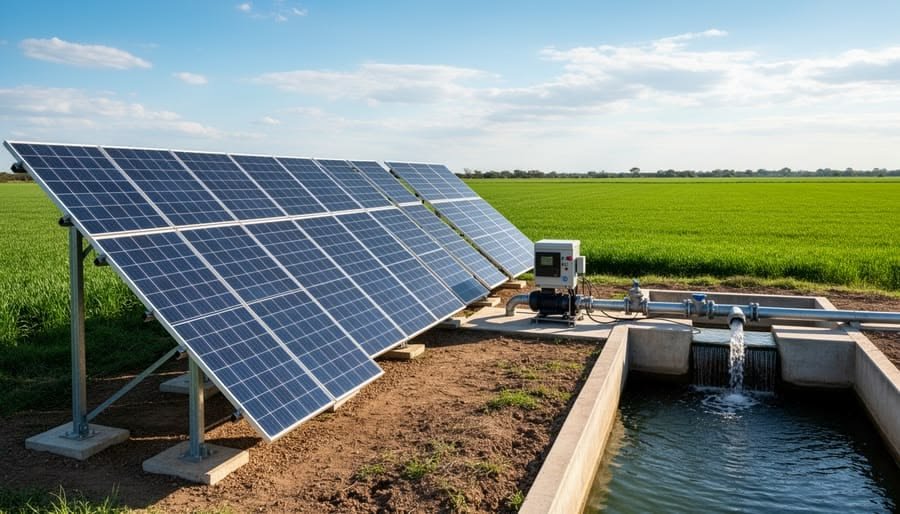
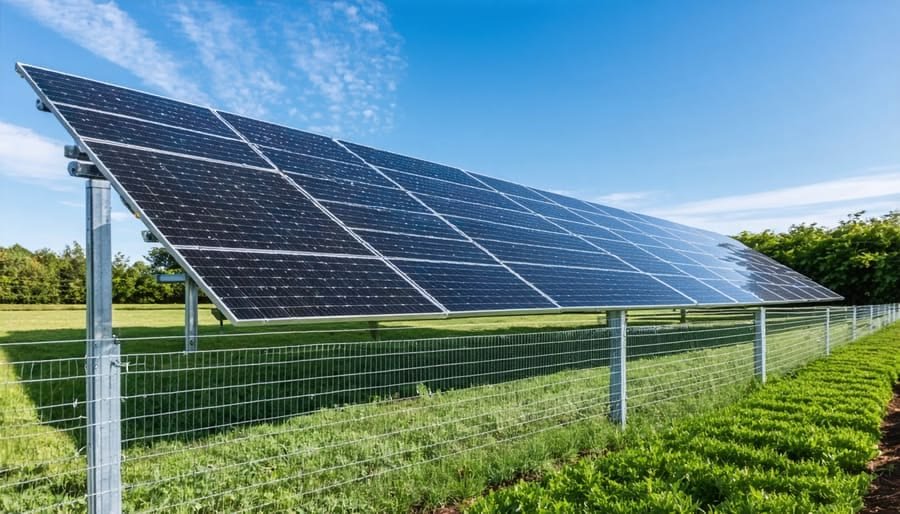
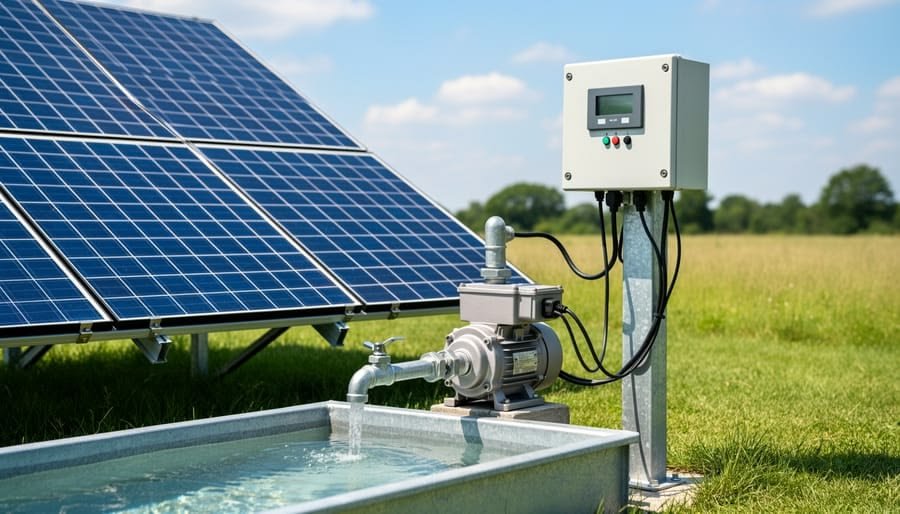
What Is a Solar Water Pump?
A Solar Water Pump is a water pumping system that uses electricity generated by solar panels to operate a pump. Instead of relying entirely on grid electricity or diesel, the system uses solar energy to draw water from a source and deliver it where needed.
The basic setup usually includes:
- Solar panels that generate electricity.
- A solar pump controller or inverter.
- A water pump, such as a submersible or surface pump.
- Pipes and fittings for water delivery.
- A suitable water source, such as a borewell, open well, pond, or storage tank.
The pump can be used to fill overhead tanks, irrigate agricultural land, or supply water to livestock. The exact arrangement depends on the depth of the water source, required water flow, and available sunlight.
How Does It Work?
During daylight hours, solar panels convert sunlight into electrical energy. The controller manages the power supplied to the pump, allowing it to operate according to the system design.
The pump draws water from the selected source and pushes it through pipes to the required destination. When sunlight is stronger, the system may produce more power. When sunlight is weak, pumping performance can reduce.
Unlike a conventional pump that depends on a regular electricity connection, a solar-powered system is designed around the availability of solar energy.
Benefits of a Solar Water Pump for Agriculture
For farmers, water management is closely connected to crop health, operating costs, and daily work. A well-designed solar pumping system can help address several of these challenges.
1.Reduced Dependence on Electricity and Diesel
Electricity supply can be inconsistent in some agricultural areas, while diesel prices can add to farming expenses. Solar pumping provides another source of energy for operating the pump during suitable daylight conditions.This can be particularly useful for farmers who need water during the day and have sufficient sunlight at their location.
2.Lower Running Costs
Once installed, a solar system does not require regular diesel purchases to operate. Solar energy is available without a fuel bill, although the system still requires maintenance and may involve replacement costs over time.The actual financial benefit depends on the pump size, usage, water requirement, and installation cost.
3. Useful for Remote Locations
Some agricultural fields are located away from reliable electricity connections. Extending an electrical connection to such areas may be expensive or impractical.A Solar Water Pump can be considered for remote agricultural locations where solar exposure is suitable and the water source is accessible.
4. Supports Sustainable Water Management
Solar energy is a renewable source of power. Using it for water pumping can reduce reliance on fossil fuels and help lower operational emissions compared with diesel-powered alternatives.However, solar pumping does not automatically mean unlimited water use. Efficient irrigation and responsible groundwater management remain essential.
Solar Water Pump Installation: What You Need to Know
Installing a Solar Water Pump is not simply a matter of placing solar panels near a water source. The pump, panels, pipes, and controller must work together as one system.A professional installer begins by understanding the customer’s water requirement and site conditions.
Step 1: Site Assessment
The installation team checks the location, available sunlight, water source, and proposed panel area. Shade from trees, buildings, or other structures can affect solar generation.
The depth of the borewell or well is also important because it influences the pump selection.
Step 2: Water Requirement Calculation
The installer estimates how much water is needed each day. A farm growing vegetables may have different requirements from a household, dairy farm, or garden.
Important factors include:
- Daily water demand.
- Water source depth.
- Required delivery height.
- Distance between the pump and destination.
- Available sunlight.
- Type of irrigation system.
Step 3: Pump and Solar System Selection
The pump capacity and solar panel capacity should be selected according to the calculated requirements.A pump that is too small may not deliver enough water. A pump that is unnecessarily large can increase the installation cost without providing a practical benefit.
Step 4: Installation and
Testing
The solar panels are mounted in a suitable location, while the pump and controller are installed according to the system design. Pipes and electrical connections are checked carefully.After installation, the system is tested to confirm that water is being delivered as expected.
Is It Worth the Investment?
One of the first questions customers ask is, “How much will a solar pumping system cost?”There is no single price that suits every site. The cost depends on the size and type of equipment, installation requirements, and the amount of water the system needs to deliver.
Factors That Influence Installation Cost
Pump capacity:
A system designed for a larger water requirement may need a higher-capacity pump and additional solar panels.
Water source depth:
Deep borewells may require specialized submersible pumps and more power to lift water.
Solar panel capacity:
The number of panels depends on the pump’s electrical requirements and expected operating conditions.
Installation location:
Difficult terrain, long pipe runs, or additional mounting work can increase the overall project cost.
Accessories:
Controllers, mounting structures, cables, protection equipment, and water storage arrangements may contribute to the final price.
Solar Water Pump Cost in Pune: What Affects the Price?
The answer depends on how much the system will be used and what it replaces. A farmer who currently spends regularly on diesel may calculate savings differently from a homeowner who already has a reliable electricity connection. A useful way to evaluate the project is to compare the estimated installation cost with expected savings, maintenance expenses, and the system’s useful operating life. For a site-specific estimate, you can contact [SAILEE Solar] to discuss your water requirement and installation location.
Solar Water Pump vs. Conventional Water Pump
Both solar and conventional pumps can be useful for moving water. The right choice depends on the location, budget, water demand, and available energy source.
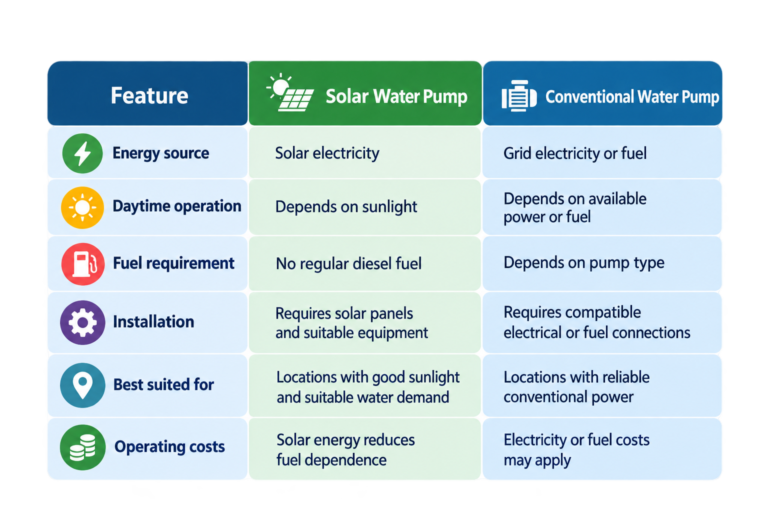
Solar pumping can be useful for reducing dependence on diesel, but conventional pumps may remain practical where grid electricity is reliable or continuous pumping is necessary.
Choosing the Right Solar Water Pump for Your Needs
The best system is not necessarily the largest or most expensive one. It is the system that delivers the required amount of water with suitable equipment and manageable operating costs.
- Before choosing a Solar Water Pump, consider these questions:
- How deep is the water source?
- How much water is required each day?
- Is the water needed for irrigation, household use, or livestock?
- How much sunlight is available at the installation site?
- Is water storage available?
- What is the budget for installation and maintenance?
Solar pumping can be useful for reducing dependence on diesel, but conventional pumps may remain practical where grid electricity is reliable or continuous pumping is necessary.
Why Professional Installation Matter
Incorrect pump sizing, poor electrical connections, or unsuitable pipe arrangements can reduce system performance. Professional installation helps ensure that the equipment is selected and installed according to the site requirements.
At SAILEE Solar, customers can explore solar solutions for residential and agricultural applications. For additional information about the company and its services, visit the [SAILEE Solar website](https://saileesolar.com/).
Frequently Asked Questions
A Solar Water Pump is used to move water from a source to a required location using electricity generated by solar panels. Common applications include agricultural irrigation, livestock watering, gardening, and water tank filling.
Solar pumping systems generally depend on sunlight to generate electricity. Water storage tanks can help maintain water availability when pumping is not possible. Some systems may also be designed with battery or other backup arrangements.
The number of panels depends on the pump’s power requirement, panel capacity, sunlight conditions, and system design. A professional installer can calculate the suitable solar capacity for the specific pump.
Yes, solar pumps can be designed for borewell applications. The correct pump must be selected according to borewell depth, water level, required flow, and total pumping head.
Yes. Maintenance may include cleaning solar panels, checking electrical connections, inspecting pipes, and servicing the pump when required. Regular inspection helps identify issues before they affect performance.
Solar pumping may be suitable for farms in Pune, provided the site has adequate sunlight and a suitable water source. The installer should assess the location and water requirement before recommending equipment.